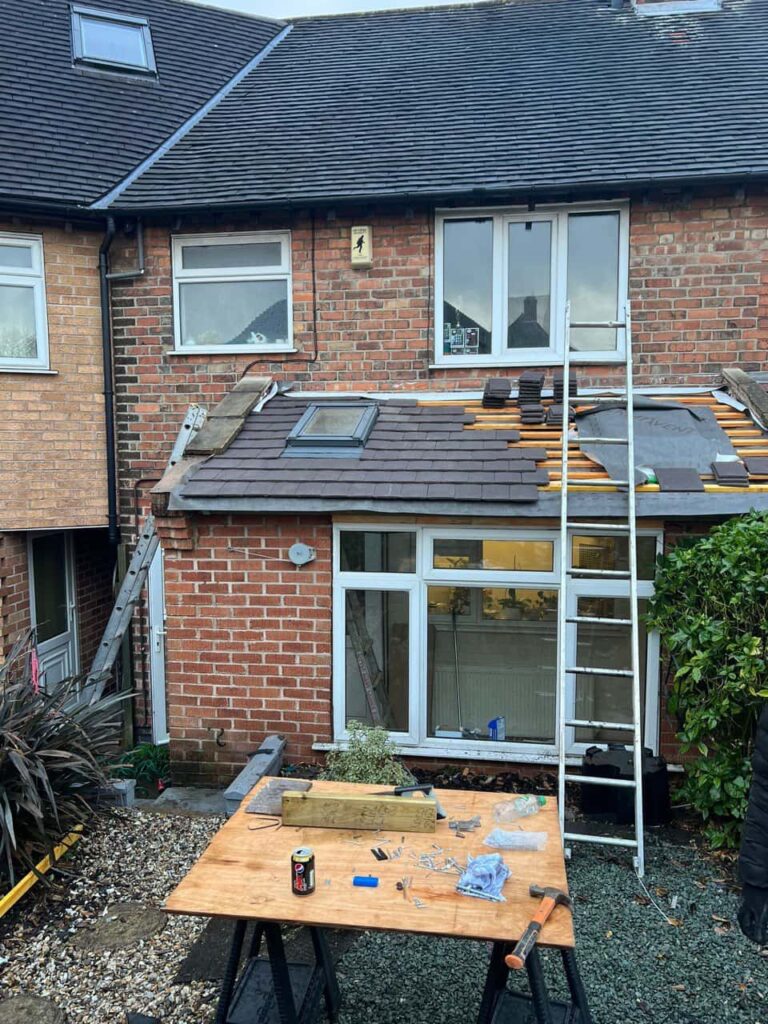
Flat roofs are a practical and widely used roofing solution for many properties, but they rely heavily on consistent performance from every layer of the system. Over time, wear and exposure to the elements can reduce their effectiveness. Knowing when repairs are no longer sufficient — and when re-roofing is the right option — is essential for protecting the building beneath. For property owners in Nuneaton, Warwickshire, recognising the warning signs early can prevent ongoing issues and structural risk.
This article outlines the key indicators that a flat roof may be approaching the end of its serviceable life.
Persistent Water Ponding
Flat roofs are designed with subtle falls to allow water to drain away efficiently. When water regularly pools and remains long after rainfall, it suggests the roof structure or surface has lost its integrity.
Why This Matters
Standing water accelerates surface deterioration and increases the likelihood of moisture penetrating the roof layers. Persistent ponding is often a sign that the roof covering and underlying structure are no longer performing as intended.
Repeated Leaks or Damp Patches
Occasional minor issues can sometimes be resolved with targeted repairs. However, recurring leaks in different areas of the roof often indicate widespread material failure rather than isolated damage.
Internal Warning Signs
Damp patches on ceilings, discoloured plaster, or recurring moisture around roof edges and junctions suggest the waterproofing layer is compromised across a broader area.
Cracking, Blistering, or Surface Splitting
Flat roof membranes expand and contract with temperature changes. Over time, this movement can cause the surface to crack, blister, or split.
Loss of Weather Resistance
Once the surface begins to break down, it can no longer provide reliable protection against rain and wind. Widespread surface damage is a strong indicator that re-roofing may be required rather than repeated patch repairs.
Aging or Deteriorated Roofing Materials
All flat roofing systems have a finite lifespan. As materials age, they become less flexible and more prone to failure.
Signs of Material Fatigue
- Brittle or thinning surfaces
- Areas where the roof covering has worn away
- General loss of uniform appearance
These signs often mean the roof is nearing the end of its functional life.
Problems Around Roof Edges and Details
The edges of a flat roof and areas around rooflights, vents, and junctions are particularly vulnerable. When these details start to fail, it can allow water to bypass the main surface entirely.
Structural Implications
If edge trims, flashings, or junctions repeatedly fail, it suggests the roof system as a whole is no longer providing a continuous waterproof barrier.
Why Re-Roofing Is Sometimes the Best Solution
While repairs can be effective in the short term, there comes a point where ongoing fixes no longer address the underlying condition of the roof. Re-roofing allows the entire system to be renewed, restoring proper drainage, weather resistance, and long-term reliability.
At Nuneaton Roofing Repairs, we assess flat roofs thoroughly to determine whether re-roofing is the most appropriate solution. Our approach focuses on long-term performance rather than temporary fixes, ensuring the roof continues to protect the property effectively.
Conclusion
Flat roofs rarely fail without warning. Persistent ponding, recurring leaks, surface deterioration, and aging materials are all clear signs that re-roofing may be necessary. Addressing these issues at the right time helps prevent more extensive damage and restores the roof’s ability to withstand the elements.
If you are concerned about the condition of your flat roof in Nuneaton, Warwickshire, Nuneaton Roofing Repairs can provide expert guidance and professional re-roofing solutions tailored to your property.
Call us on: 02475424593
Click here to find out more about Nuneaton Roofing Repairs
Click here to complete our contact form and see how we can help with your roofing needs.